Written by
Vicky Hawes
Published on
January 27, 2026
.png)
From 13 February 2026, NSW fire safety reforms move from transition to enforcement. For many building owners and managers, this has raised understandable questions and, in some cases, unnecessary anxiety.
So let’s be clear from the outset. These reforms don’t radically change what good fire safety looks like. They change who is accountable, how compliance is demonstrated, and what happens when assumptions replace evidence.
Short on time? Scroll down to the section you need:
1. What’s actually changing (and what’s not)
The most important change is accountability.
From February 2026:
What’s not changing is the idea that safety can be outsourced wholesale to a single contractor.
2. Who the reforms apply to
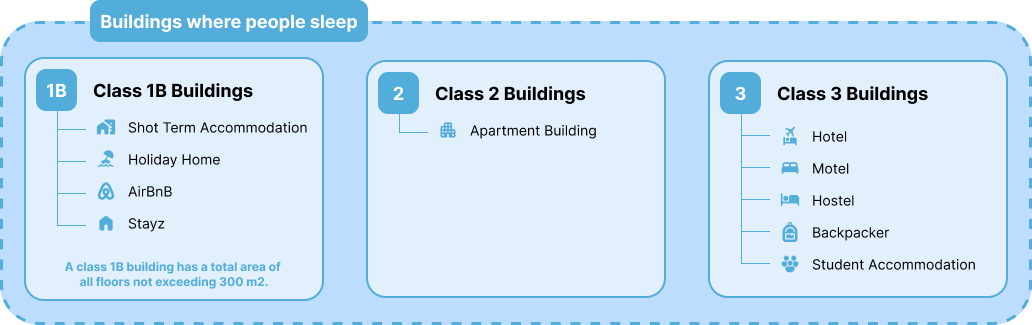
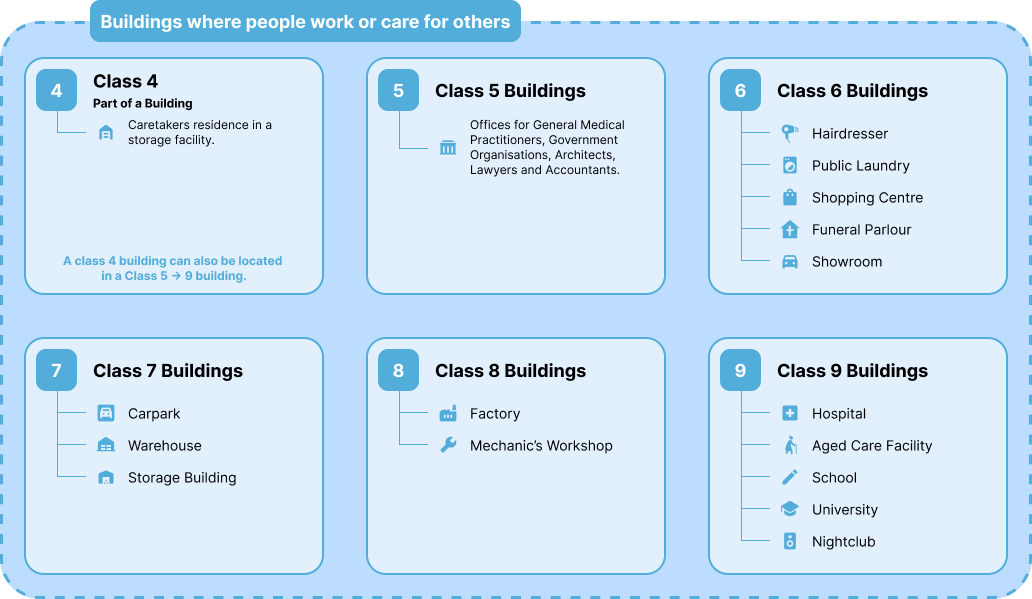
The reforms apply to anyone responsible for fire safety in Class 1b to Class 9 buildings, including:
If you own, manage,or certify one of these buildings in NSW, the reforms apply to you. Here are detailed building classification definitions provided by the Australian Building Codes Board.
3. Who is holding organisations accountable
These reforms are administered by the NSW Building Commission, which oversees building fire safety compliance and enforcement under the Environmental Planning and Assessment (Development Certification and Fire Safety) Regulation.
In practice, this means increased visibility of:
4. Where buildings are most at risk
In our experience,non-compliance rarely stems from neglect. It comes from assumed responsibility.
Common examples include:
The reforms don’t introduce new intent; they introduce enforcement.
5. Why Emergency Management Plans and Evacuation Plans matter
Two measures that often appear on a Fire Safety Certificate:
They serve different purposes:
Both are created at construction, must be reviewed, and updated whenever a building is modified, extended, or changes to use.
Most importantly, they only work if they are:
6. What good compliance looks like in practice
Good compliance isn’t about ticking every box. It’s about being able to clearly demonstrate responsibility, maintenance, and readiness when it matters.
In practice, this means:
Critical information is usable during an emergency, not just compliant on paper.
7. How Locatrix supports compliance and readiness
Locatrix supports building owners, managers and fire contractors to remove ambiguity and make fire safety information usable, not just compliant.
PlanStudio creates accurate, digital evacuation plans that can be shared freely with emergency services, giving first responders immediate access to critical information.
PlanSafe transforms Emergency Management Plans into a digital, role-specific training experience, enabling:
Together, they reduce reliance on paper plans, in-person briefings, and institutional memory.
8. Start with the compliance checklist
To help building owners, managers and contractors prepare, we’ve created a Master Compliance Checklist focused on:
If you’re unsure where responsibility sits in your building, that’s the right place to start.
9. Additional resources
1. Reforms to building fire safety regulation
Overview of staged fire safety reforms in NSW including mandatory AS 1851-2012 from 13 February 2026.
2. Building fire safety requirements under AS1851-2012
Government explanation of mandatory maintenance standards and owner responsibilities.
3. Fire Safety Schedule (FSS) template
NSW Government Fire Safety Schedule form and guidance.
4. Fire safety certification – NSW Planning Portal
Clarifies how Fire Safety Certificates and Annual Fire Safety Statements relate.
5. Annual Fire Safety Statement – Fire and Rescue NSW
Requirements for lodgement and display of AFSS.
6. Environmental Planning and Assessment (Development Certification and Fire Safety) Regulation 2021
The regulation that gives effect to the reforms.
The bottom line
The NSW Fire Safety Reforms aren’t about catching people out; they’re about ensuring that when something goes wrong, buildings – and the people inside them – are genuinely prepared.
Clarity is now a compliance requirement.
Accessibility is now a safety issue.
And assumptions are no longer enough.
.jpg)